

The annual charts for Tónlistinn were recently released, revealing various interesting statistics regarding Icelandic music consumption in 2025. Tónlistinn publishes two main charts: one for the best-selling albums of the year and another for the most popular songs. The album chart includes sales figures from physical and online stores, but also factors in total plays on Spotify, which are converted into "units sold" according to international standards. The song chart summarises the most-played tracks on the radio and gives Spotify streams equal weight to radio airplay.
Neither list accounts for plays on other streaming services, so they are not perfect measurement tools, though they are closer than most other available resources. It is worth noting that the FHF (Association of Phonogram Producers) estimates that Spotify revenue accounts for up to 95% of all digital music revenue in Iceland. Therefore, it is assumed that including other streaming services would not significantly alter the rankings.
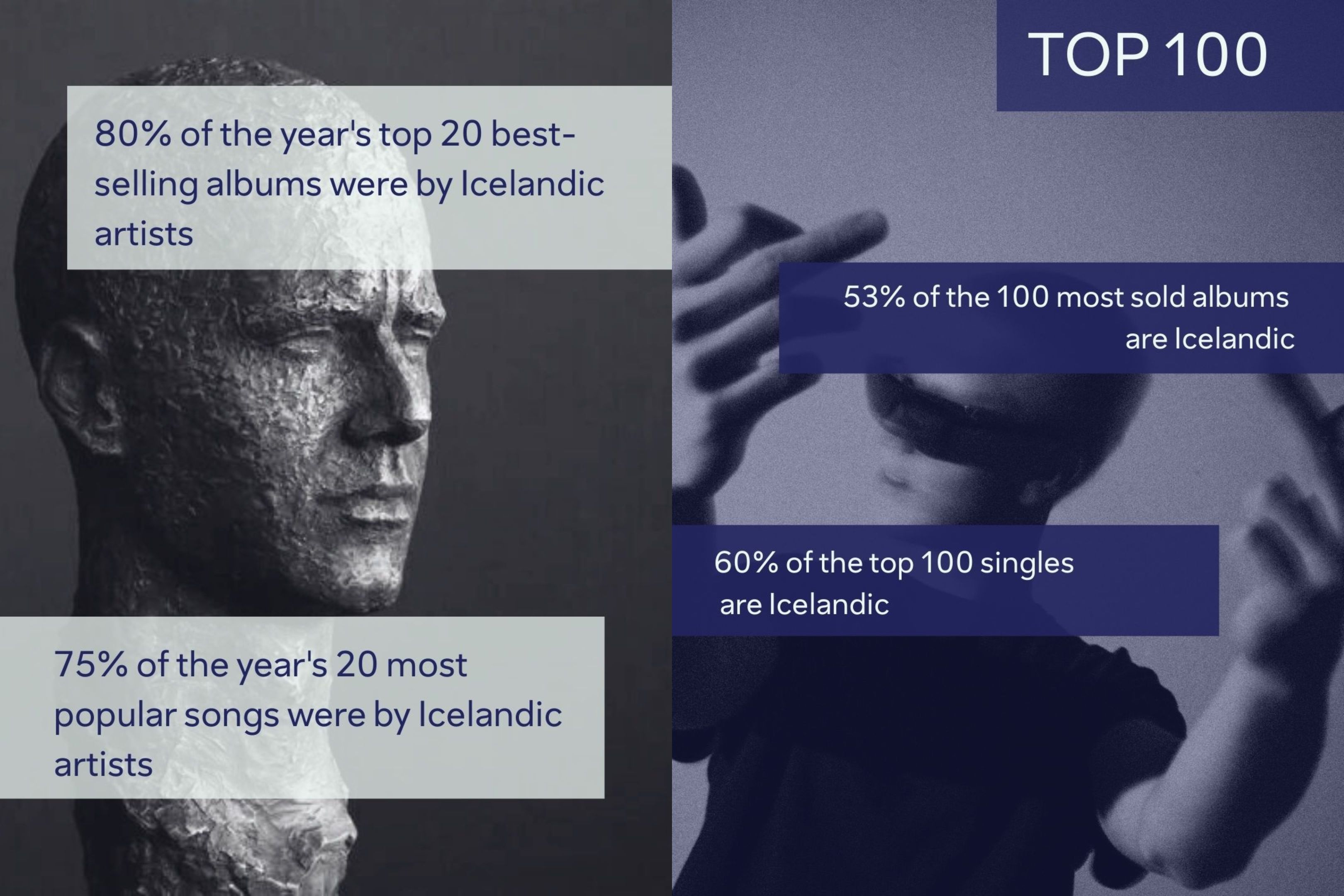
According to FHF’s newly released 2024 audit, sales of Icelandic music increased by 16% year-over-year. However, Icelandic music is still in the minority overall, accounting for approximately 20% of total music sales in the country and about 19% of streamed music. The charts for best-selling albums and popular songs show a different picture, suggesting that music consumption is quite fragmented.
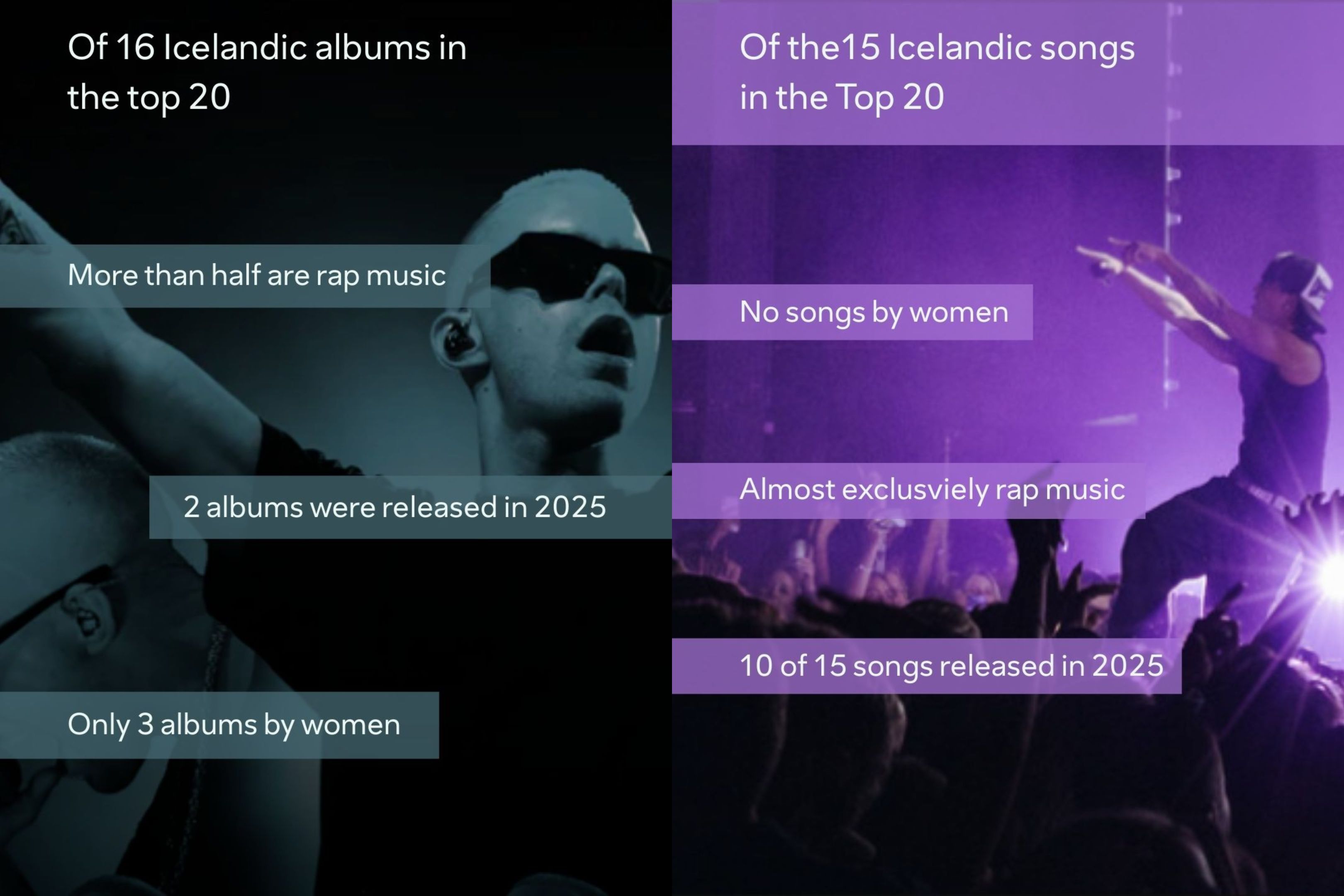
The album chart can be described as having a certain "timelessness." Aside from the Icelandic rap albums in the top 20, one can find relatively recent but modern classics like Kveðja, Bríet (2020), A/B by KALEO (2016), and Dýrð í dauðaþögn by Ásgeir (2012). The foreign albums on the list are even older: Parachutes (2000) by Coldplay, OK Computer (1997) and In Rainbows (2007) by Radiohead, and Rumours (1977) by Fleetwood Mac are all in the upper part of the list.
The fact that all new Icelandic albums on the list are rap albums suggests that Icelandic rap is capable of gaining popularity faster than other genres. However, its popularity seems to fade more quickly; of the 27 Icelandic albums on the list older than five years, only seven are rap albums.
Aside from Hafdís, who had the best-selling album of the year, no other woman is found in the top 10. Kveðja, Bríet sits at 12th place, and A Matter of Time by Laufey is 15th. Consequently, women account for only 3 of the 20 best-selling Icelandic albums of the year.
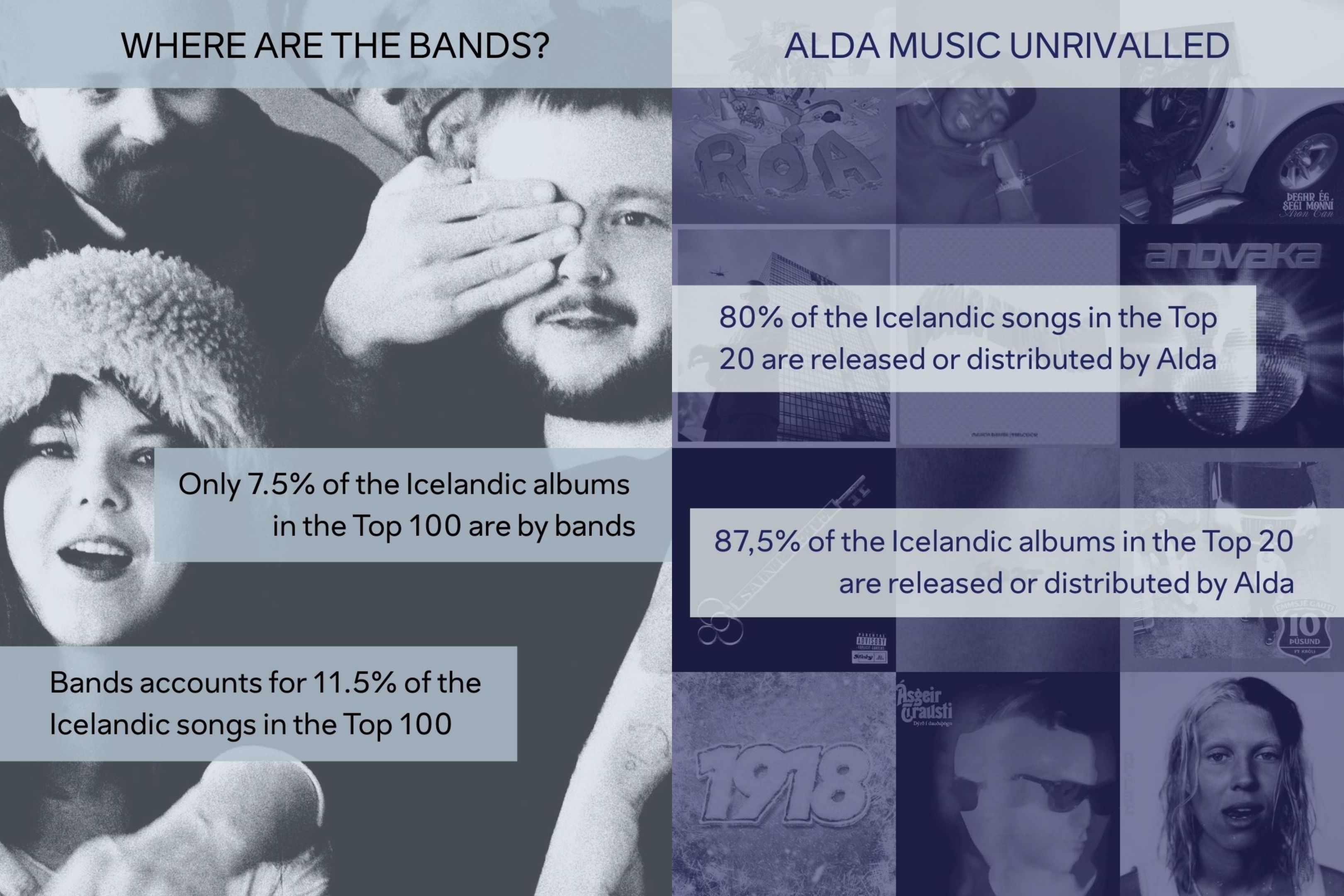
The list contains only four albums by Icelandic bands: the self-titled KALEO album (2013) and A/B (2016) by the same band, 1918 by ICEGUYS (2024), and Garg by Sálin hans Jóns míns (1992). This is the same number of albums that a single artist, Birnir, has on the list.
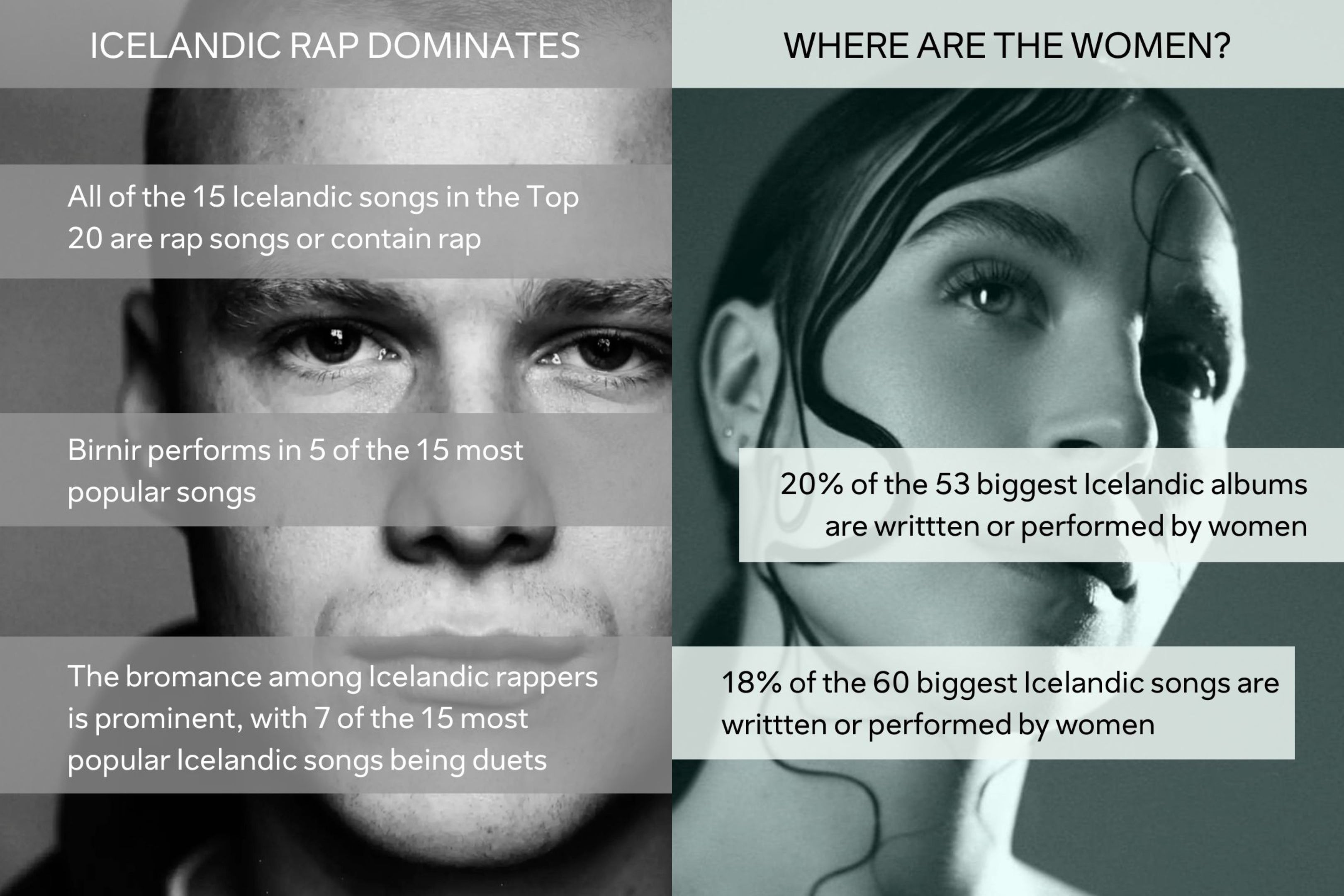
The list of the most popular Icelandic songs of 2025 is quite homogenous, clearly showing that male rappers dominate. It is particularly interesting to note the frequency of collaborations; nearly half of the Icelandic songs in the top 20 are rap duets.
Notably, no song in the top 20 is performed or composed by an Icelandic woman, and only 20% of the Icelandic songs in the top 100 involve women. Alaska1867 is the highest-ranking woman, reaching 26th place in a collaboration with Aron Can and Þormóður. The next woman is BRÍET at 55th in a collaboration with Birnir. Only three songs on the list (Rólegur kúreki by BRÍET, Silver Lining by Laufey, and Touch Me by ÁSDÍS) are by solo female artists.
The "band" format is on the decline on the song chart; only 7 out of 60 Icelandic songs can be considered works by bands, and ICEGUYS account for three of those.
The Icelandic language is dominant on the chart. The only Icelandic artists on the list who perform in English are Laufey, KALEO, Of Monsters and Men, ÁSDÍS, and Daði Freyr—all artists who enjoy significant international popularity.





.svg)
.svg)
.svg)

